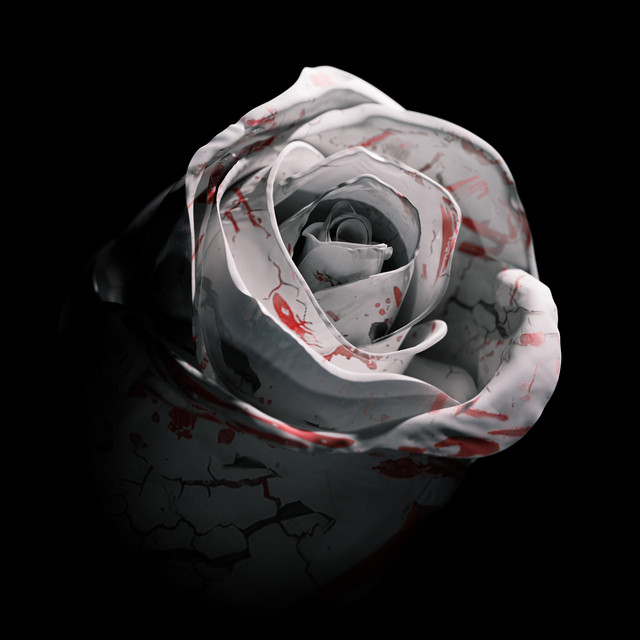
- Album
- Romantic Homicide
- Released
- July 20, 2022
- Added to Lately
- Nov 2022
- Runtime
- 2:13
- Sounds like
- bedroom pop · indie rock · alt-r&b · d4vd · bedroom-pop · indie-rock · alt-r-and-b · 2022
Romantic Homicide opens with two words most breakup songs spend their whole running time avoiding: “I’m scared.” No setup, no scene, just the admission. d4vd has said that line was the breakthrough. He had worked on the song for a long time after a breakup without getting anywhere, scrapped three earlier versions, and then, sitting in his younger sister’s bedroom closet in Houston, said it out loud. The rest came in about 30 minutes, in what he called a flow state, recorded straight onto his phone.
That order matters, because the song is built on fear wearing a disguise. The early lines are almost polite. He asks to be enlightened and wonders why he’s still here, the voice of someone holding on long after being let go. Then the waiting curdles. Sick of standing by for someone who won’t arrive, he does the one thing that ends waiting: he imagines the other person gone. The killing happens in the back of his mind, and d4vd has been clear that it is figurative, a death that stays in the head. He doesn’t cry. He doesn’t regret it. The numbness is the point. Not grieving is a way of taking the power back.
What keeps the song from being a pose is the flinch that follows: “I can’t believe I said it.” For one line, the narrator hears himself and is startled. Then he doubles down, insisting it’s true, and the lyric closes on “I hate you.” Shame and defiance sit right next to each other, and neither wins. d4vd has said the song draws on Itami, the murderous alter ego of a detective in a manga he was writing. Itami means “pain” in Japanese, which is a neat key to the whole thing: the killer here is hurt, given a name and a voice.
The music doesn’t dramatize any of it. A clean electric guitar turns over an arpeggiated chord pattern, the bass holds simple sustained root notes, and the drums keep a steady, driving beat at a moderate tempo. The voice is clear and a little nasal, melodic and sustained, with no harmonies to soften it. That evenness is what makes the lyric chilling. He describes a death in his head the way you’d describe weather.
It’s a bedroom-pop record in the most literal sense, one of the phone-made, TikTok-carried songs of its moment, with moody indie-rock and alt-R&B leanings. It went viral, entered the Billboard Hot 100, and led to a Darkroom/Interscope deal. Credits list Dan Darmawan and David Burke as writers.
The song lets you say the ugliest thing heartbreak makes you think, then catch yourself saying it, and that small gasp of recognition is what keeps pulling you back.
[ Sources ]
[ Written with AI assistance · the taste is all mine ]