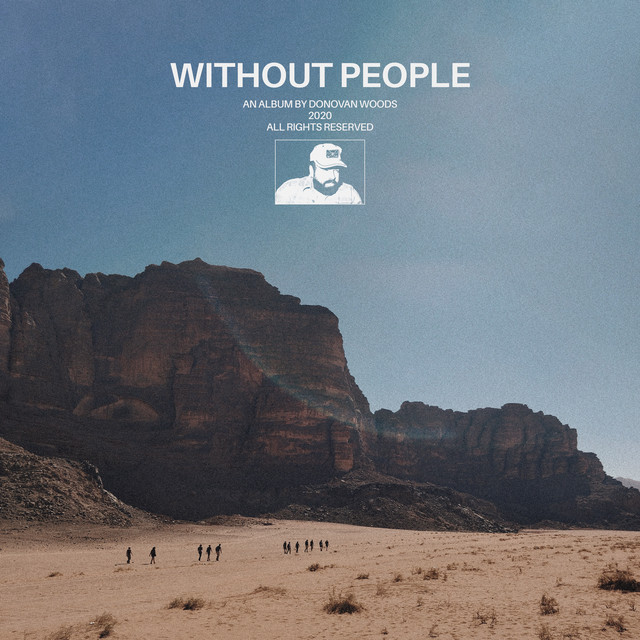
- Album
- Without People
- Released
- November 6, 2020
- Added to Lately
- May 2024
- Runtime
- 2:50
- Sounds like
- singer-songwriter · country pop · folk-pop · donovan-woods · country-pop · 2020
The tell is the word “man.” Tucked inside the last platitude of the chorus, “It is what it is, man, it’s alright,” it tells you exactly who the narrator of Grew Apart is talking to: other guys, probably over a drink, probably asking what happened. And what happened, we learn in the verses, is ugly. There were nights she left, texts he received, a lie told “with a straight face.” He has the receipts. He just won’t use them.
Donovan Woods wrote the song with Travis Wood and Logan Wall, and the chorus is built entirely from things people say in quotation marks: “It’s for the best,” “We had a good run,” “We wanted different things.” Each line is reported speech, a script he recites rather than a feeling he has. The Line of Best Fit called them the sad platitudes men tell each other after a breakup, and the song’s real trick is how it hollows them out. By the time he lands on the hook, “I’ll just tell that we grew apart,” the phrase is no longer an explanation. It’s a cover story he’s choosing, over and over, in public.
Why choose it? The second verse is where the song gets honest, and where it hurts most. He admits he doesn’t know why he keeps quiet, then guesses that maybe he hopes it isn’t really over. Then he turns on himself: “Am I that weak?” That question doesn’t get an answer. The song holds two readings side by side and leaves both standing. Keeping her secrets is decent. It’s also a way of keeping the door open. Loyalty and longing look identical from the outside, and he can’t tell them apart from the inside either.
Rolling Stone called it a looser, funkier song, and the arrangement plays the same game as the narrator. The groove is relaxed and slightly swung, with a snare on the backbeat, a simple bass line, acoustic guitar, and a clean electric guitar picking out arpeggios. A high harmony shadows Woods’ slightly raspy, mid-range voice, and his delivery stays conversational, with a slight country inflection. The production is clean and polished, and the voice never cracks. It’s the musical version of “I don’t break.”
That sleek finish is the pop sheen Without People laid over Woods’ Canadian folk and country songwriting, on an album made remotely during the pandemic, with Woods working from his Toronto home and producer James Bunton on the other end of the files. Here the gloss serves the story. Woods later released a piano version, recorded solo and with Logan Mize, and says the two versions together passed 15 million streams. Plenty of people, it seems, know this script by heart.
The song lets you hear a heartbreak through the exact words someone uses to hide it, so every easy “it’s alright” lands like the worst thing he could say.
[ Sources ]
- James Bunton: Donovan Woods
- Shore Fire Media: Donovan Woods’ ‘Without People (Deluxe)’ Album Out Today (3.26)
- Killbeat Music: DONOVAN WOODS NEW LP, WITHOUT PEOPLE, OUT NOW - SHARES NEW VIDEO FOR “WE USED TO”
- musictalkers.com
- Rolling Stone: Donovan Woods Details New Album 'Without People'
- The Line of Best Fit: Donovan Woods: The Gentle Storyteller | Interview
- parade.com
[ Written with AI assistance · the taste is all mine ]