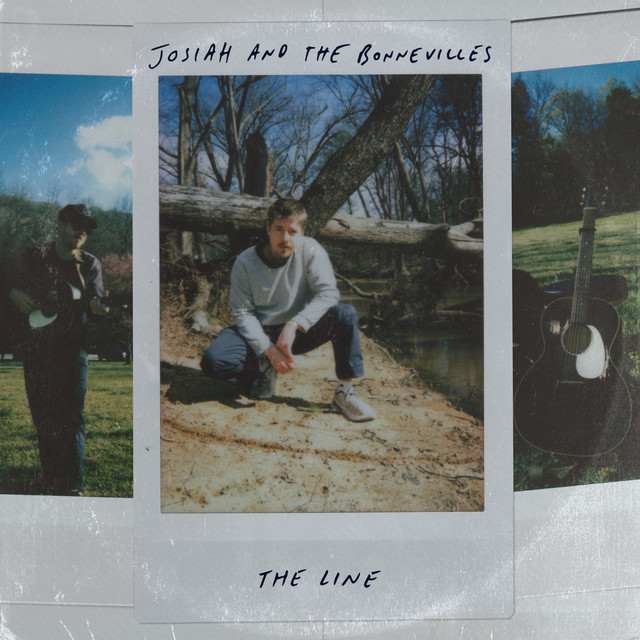
- Album
- The Line
- Released
- May 31, 2023
- Added to Lately
- Oct 2023
- Runtime
- 2:06
- Sounds like
- folk · americana · appalachian folk · josiah-and-the-bonnevilles · appalachian-folk · 2023
The trick of The Line is that the narrator gives the whole game away in the first verse. A boundary gets drawn between two hearts, and it sounds sensible until the last line of the stanza: “I do this every time.” This isn’t a person learning a lesson. It’s a ritual, a fence built knowing it’s going to be climbed, and Josiah and the Bonnevilles sing it with no alarm at all.
Josiah Leming wrote and produced the song, and it landed on Endurance, the record he made in his bedroom studio in Tennessee and described as being about the endurance of family, love, pain and, above all, hope. That last word matters here, because “The Line” is a song about hope the narrator wishes they didn’t have. The line is called pretty, and it promises everything will be fine as long as the narrator stays put. The self-protection is real, but so is the faint mockery in calling it pretty. The narrator half-knows it’s a story told to keep from getting hurt.
Then the chorus admits the pleasure out loud. Hearing someone swear their love is true feels good, and the narrator can’t deny it. That honesty sits right next to the hard part: “Cause it could never come to be.” There’s no reason given, and none needed. Something makes this impossible, and the feeling shows up anyway, “something so divine.” Watch the pronouns, too. The narrator is the one wandering across the line, and then the chorus says it’s you who crosses it. Whose fault is it? The song won’t settle it, and the echoed “cross that line” at the end of each chorus sounds less like blame than like surrender.
The second verse tries to argue its way to calm with a run of proverbs. Good things come slowly, the runner’s born to run, wings are made to fly. It’s the voice of someone who has done this before and is reaching for fate to make it hurt less. But the proverbs cut both ways. Maybe the other person is built to leave. Maybe the narrator is.
The sound stays close and small. A fingerpicked acoustic guitar rolls through arpeggios at a slow, easy pace. The lead vocal is breathy with a little rasp, and a second voice sings high harmony above it. The project sits in Tennessee-rooted folk and Americana, and that pairing of fingerpicking and a high harmony fits there comfortably. The production is clean and clear, with the air of a real room, and nothing is added to dress the feeling up.
It sticks because you know exactly where your own line is, and you know, like this narrator, that you’re going to be glad when someone crosses it.
[ Sources ]
- readdork.com
- discogs.com
- Whiskey Riff | A RIFF on what country is really about.: Josiah And The Bonnevilles Tackle Love, Loss & Hope On Self-Produced Album ‘Endurance’ | Whiskey Riff
- EUPHORIA.: Josiah & The Bonnevilles - Mercury Lounge
- countrystandardtime.com: Josiah and the Bonnevilles sign with Rounder, record coming in May
- Americana UK: Josiah brings his Bonnevilles with him for his latest album
[ Written with AI assistance · the taste is all mine ]