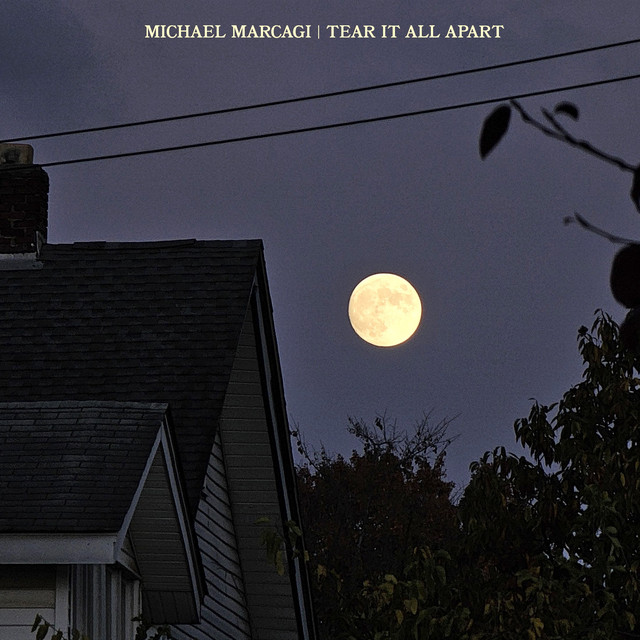
- Album
- Tear It All Apart
- Released
- June 21, 2024
- Added to Lately
- Jun 2024
- Runtime
- 3:06
- Sounds like
- folk rock · americana · indie folk · michael-marcagi · folk-rock · indie-folk · 2024
The house is still there. That’s the cruel joke at the start of Tear It All Apart: Michael Marcagi keeps driving to the place he grew up, laughing it off in the rearview, and only then gives the detail that turns the scene: “But my parents haven’t lived there in four years.” He isn’t visiting anyone. He’s visiting a version of himself that the building still seems to hold, and he can’t stop going back.
Marcagi has said the song is about growing up and watching your sense of home change while the place looks exactly as it did when you were a kid. That’s the ache in the first verse, but the song soon turns from the house to a person. He admits he’s always had trouble letting go, that he loses sleep over dumb things he’s said, and then comes the confession, quietly brutal: “I never really had much room for you.” He held on to every passing worry, and the one person who mattered got crowded out.
What keeps this from turning into a tidy apology is how many feelings he lets stand at once. He wanted more of this person and gave nothing of himself. In the next breath he reaches for a defense: growing up means you can mess things up even when you’re trying to help. It’s half insight, half excuse, and the song doesn’t sort out which. He asks them to leave a light on, then admits there’s nothing he can say to make them believe him. The song lands on the real subject: “It’s always me that I’ve been running from.” The house, the person he let down, the guilt all point back to the same restless figure in the car.
The sound gives all that a steady floor. Strummed acoustic guitar and a walking bass line set a moderate, driving pace, and the drums give it a slight push with a firm snare. Marcagi sings clear and a little rough, earnest and direct, with a touch of reverb, and the mix stays clean and full without crowding him. David Baron produced, mixed and recorded it, adding piano, Rhodes guitar and Mini Moog, and the credits list Kyle Emerson on banjo and co-writer Andrew Yorio on mandolin. It sits in a Midwestern folk-rock lane, and critics often set the Cincinnati songwriter beside Noah Kahan and Zach Bryan.
Marcagi called it a departure, the first time he’d written this way. He has also said that collaborating on songs like this one was new for him, after his earliest solo songs were written alone in his bedroom. Maybe that explains the openness. The song closes on wordless whoa-ohs, as if the words ran out before the feeling did.
It sticks because it catches you in the act of driving back to somewhere that’s gone, and makes you admit who you’re really looking for.
[ Sources ]
[ Written with AI assistance · the taste is all mine ]
