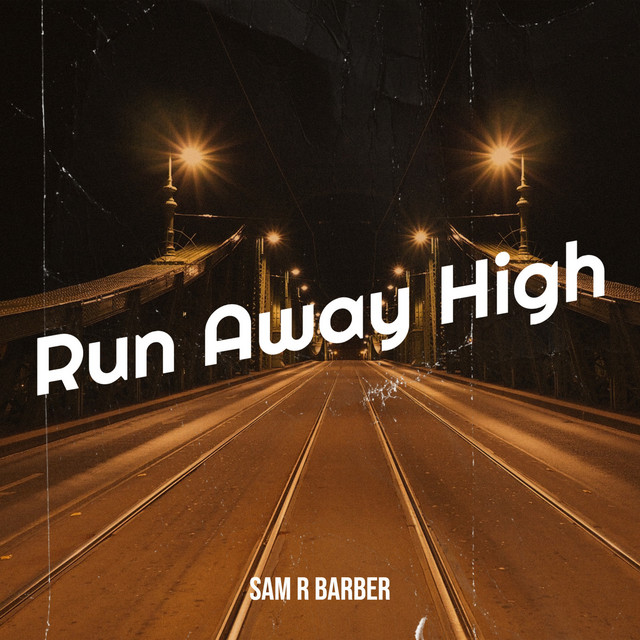
- Album
- Run Away High
- Released
- September 6, 2021
- Added to Lately
- Jan 2024
- Runtime
- 3:22
- Sounds like
- americana · outlaw country · folk · sam-barber · outlaw-country · 2021
The most telling detail in Run Away High is a guess about a stranger’s age. The song’s “she” has found a good old man down in the sticks, and everything we learn about him comes through a jealous squint: sharp as a knife, and “hell, he’s probably 36.” Then he crosses the narrator’s path, and the old six-shot comes out. The song gives the killing a couple of lines and never says the word that drives it. Heartbreak is right there, and the narrator won’t say it out loud.
That refusal is the song. Sam Barber, the sole writer, builds a narrator who keeps insisting he doesn’t care: about the cheap cigars burning his lungs, about the cops on his tail, about whether he lives. The first verse gives the pose away with “All the sins I’ve made and the time I ought to be dead by now.” It reads like a boast, but it’s also a tally, and someone keeping count of their sins hasn’t stopped caring about them. The chorus calls this a comedown, not a high, and that’s honest. The recklessness is what happens after the rush, when the only plan left is to keep driving south.
The hook, “So, what’s one more sin before I reach the Baton bayou?”, turns fatalism into permission, the fugitive handing himself a pass. Barber plays it straight. The lyric never builds to a reckoning or a capture. It closes on the chorus twice in a row, as if the narrator can only repeat the same rationale. Pride and grief sit side by side, and neither wins.
The record’s backstory fits the story’s roughness. This was Barber’s first single, released while he was studying civil engineering at State Technical College in Linn, Missouri, and he has told Billboard his earliest releases were just phone audio from voice memos. It’s an early recording of Barber and a guitar and nothing else. He grew up on a 400-acre family farm in Frohna, Missouri, started writing at 16 on his great-grandfather’s old five-string Gibson, and first got noticed covering Zach Bryan’s “Revival.” That places him in the current wave of raw, outlaw-leaning Americana singer-songwriters. The song has taken on more weight live: at the Fonda Theatre in Hollywood his band gave it a fiddle and deep bass intro, plus guitar and fiddle solos. The bones were strong enough to carry it.
What sticks is the gap between what the narrator says and what he did, and you end up hearing the hurt he won’t admit underneath every shrug.
[ Sources ]
- Run Away High lyrics: Sam Barber
- Wikipedia: Sam Barber (singer)
- billboard.com: Sam Barber: Billboard's October Country Rookie of the Month
- songmeaningsandfacts.com
- Music Connection Magazine - Informing Music People Since 1977 - Music Information - Music Education - Music Industry News: Live Review of Sam Barber
- songfacts.com: Sam Barber Artistfacts
[ Written with AI assistance · the taste is all mine ]