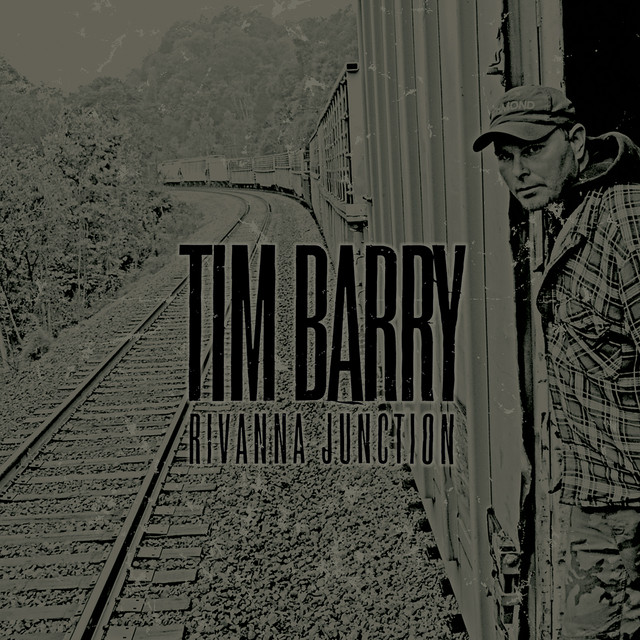
- Album
- Rivanna Junction
- Released
- Invalid Date
- Added to Lately
- Dec 2022
- Recorded at
- Minimum Wage Studio, Richmond
- Runtime
- 3:37
- Sounds like
- folk-punk · folk · americana · tim-barry · 2006
The lyrics open with a parenthetical aside: Tim Barry hates this song. Before the first verse he’s already called it a pain in his ass, and the rest of Avoiding Catatonic Surrender keeps arguing with itself the same way. The first scene is a Motel 6 in East Brunswick, New Jersey: smoking until the lungs burn, ice in the trash can to cool the beer. Then comes the detail that turns a road complaint into something lonelier: “Breathe in the perfume in the room of the person last here.” He’s alone, and the closest thing to company is the scent a stranger left behind.
The feeling isn’t homesickness. It’s the trap of “I can’t stand being home, lord, I can’t stand being gone,” where neither place brings relief and the restlessness has nowhere to land. His ears ring in the quiet. He’d call somebody, but he has nothing to say. It’s a specific kind of tired, where loneliness and the wish to be left alone share the same body.
The second verse goes back to a one-night thing: sex on the couch, a morning spent pretending it didn’t happen, a lost phone dug out from under a pile of clothes, then a 15-hour day for just over a hundred bucks. He shrugs it off. Anything that starts is bound to end. But he also says he should have kept his eyes closed, and that line gives away how much the shrug is covering.
Verse three throws out any idea of a tidy self. He throws beer cans at the TV news and sneers at Republicans, Democrats, and liberals in one breath. Then: “I think pacifists are weak and violence is wrong.” He goes limp for police and fights when it’s called for. The song doesn’t resolve any of it. The pride in belonging nowhere sits right beside the plain admission that he doesn’t know, or care, where he fits.
The sound is as bare as the confession. Strummed acoustic guitar and a walking bass keep a relaxed, steady folk-rock gait, and a harmonica threads lines between the vocal phrases. Barry’s voice is raspy and conversational, with no harmonies, and the recording is left raw. It’s the Woody Guthrie model filtered through a Richmond punk background, the same city as his band Avail, and he mocks the form from inside it, calling these boring standard songs built on boring standard chords. Caitlin Barry’s violin is credited as one take, drunk and not in tune, which tells you how much polish was the goal.
Barry has said his father heard the album and asked if he was alright, because there was a lot of pain on it. Barry told him he was, because he’d gotten it out. The chorus keeps saying so long and insisting he can’t keep singing these songs, even as he sings it again and again. That contradiction is the hook: you hear someone swearing off the very thing that gets the pain out.
[ Sources ]
[ Written with AI assistance · the taste is all mine ]
