Grand Ole Opry
A Grand Ole Opry night with Josiah and the Bonnevilles, Bearded Iris Homestyle, Watermelon Nutrls, and the rare feeling that every piece of the show actually delivered.
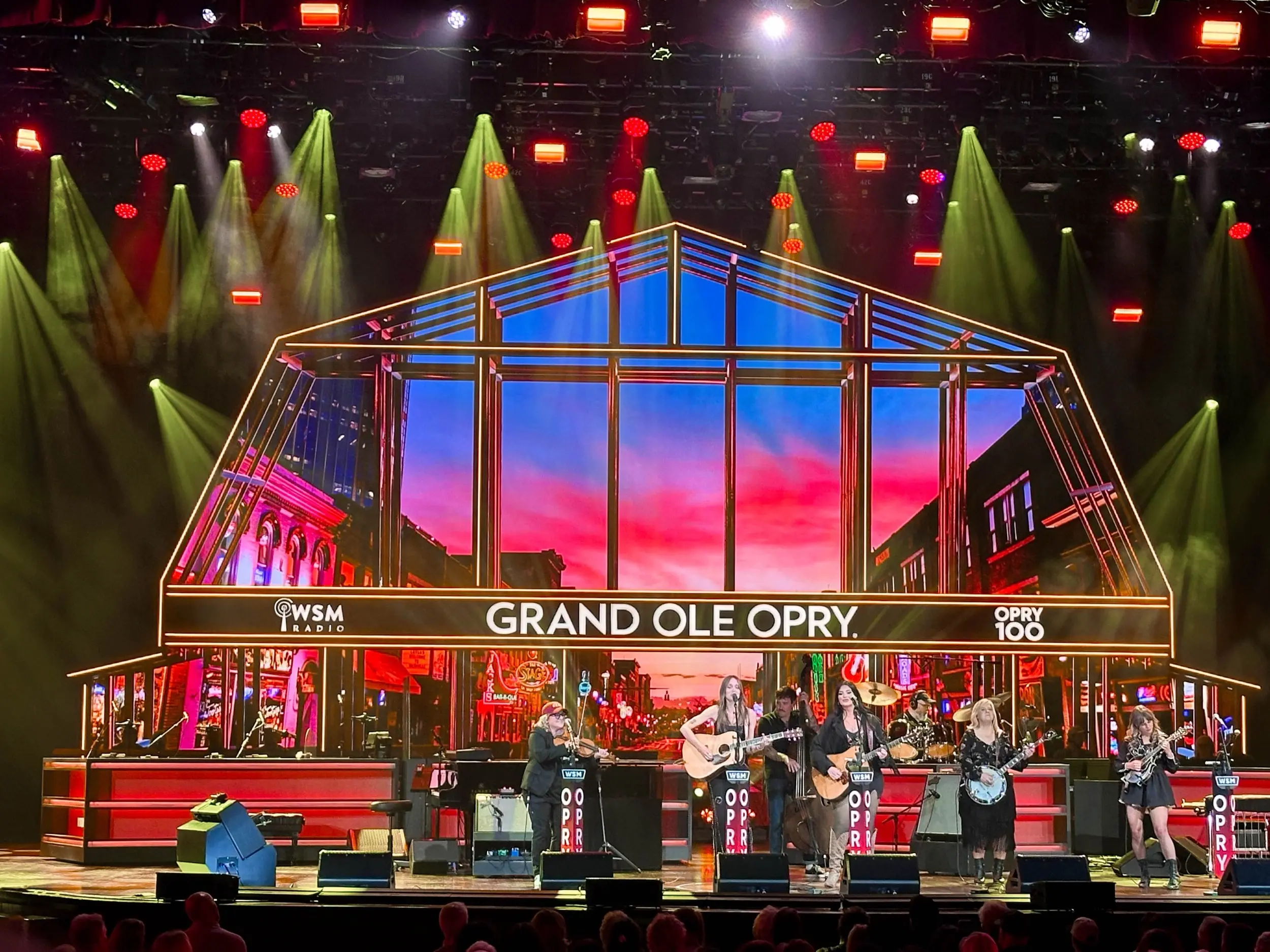
The Grand Ole Opry is the kind of place that risks feeling less like a venue than a national shrine with a lighting budget, which is not always the same thing as a good night out. But the house knows exactly how to sell the room. That giant glowing facade, the big block-letter sign, the green beams falling from the rafters, the whole thing looking half broadcast set and half country-music cathedral—it should be too much, and somehow it lands right on the side of fun.
Josiah and the Bonnevilles were the reason to show up, and they more than justified the trip. But the sneaky pleasure of the Opry is that it rarely asks one act to do all the work. The format keeps the night moving, swapping momentum for momentum, until you stop grading the evening on whether your original draw delivered and start noticing that the entire machine is built to keep dead air and disappointment to a minimum.
A Bearded Iris Homestyle and a Watermelon Nutrl are not profound beverages, which is part of their usefulness here. The Opry can carry a lot of mythology on its shoulders, so it helps to have something cold and uncomplicated in hand while the stage keeps turning over. Good production, quick transitions, easy drinks, no unnecessary overthinking. There are worse formulas for a night in Nashville.
That is what made this one work. Josiah and the Bonnevilles gave the night its starting point, but the whole show ended up being the story: polished without going sterile, theatrical without feeling fake, and sharp enough to remind you why an institution becomes an institution in the first place. The Grand Ole Opry may trade in legacy, but on a good night like this it still knows how to feel alive.